Natural Progesterone
Oil Supplementation and Hormone Balancing
|

| I am 54 years old and have been
using Progest E for 8 years. Can't live without it.
Great sleeping, well being.
Thanks for the dosage article. It has been a mystery to me as to how
much to take. |
Heart Health
Dr. John Lee authored three books on the subject of natural progesterone and among other things, he concluded that progesterone decreases coronary vasospasm. To quote Dr. Lee, "prior to menopause it's nearly impossible to kill a woman with a heart attack (unless she's diabetic, seriously obese, or a cigarette smoker), but within 10 years of menopause, heart attacks start in women".
What About Fibrocystic Breasts?
Dr. Lee says he has seen them return to normal in case after case within 3 months' use of natural progesterone.
Weight Gain?
What about women who can't lose weight no matter what? If that woman exhibits any of the signs of estrogen dominance (in women over 35 they include: swollen breasts, depression, low thyroid, fibrocystic breasts, water retention, weight gain, and loss of libido), it's very possible that those weight problems are linked to imbalance between estrogen and progesterone.
It's also possible that increasing the levels of natural progesterone may help women to finally begin losing weight which has occurred in many cases.
Forerunner of Testosterone
Even though progesterone is primarily a female
hormone, it also plays a vital role in men. It's the precursor of
testosterone and corticosteroids, meaning the body uses progesterone to make
these other hormones.
Progesterone levels in men are naturally much lower than in women during their
fertile years, however, Dr. Lee says that after menopause (or even 10 to 15
years before menopause) some women's progesterone levels fall below that of
same-age men. Typically healthy men continue to produce normal testosterone and
corticosteroid levels in their 70s and 80s.,
A 1984 "Medical Tribune" article concluded that very large doses of progesterone
in (college-age men in the study) worked "only as a contraceptive", and didn't
result in any change in general stamina, vigor, or sex drive. But those
large doses did result in a drop in testosterone sufficient enough to inhibit
sperm maturation.
However, men with prostate cancer are typically offered castration in the form of chemicals or surgery to reduce their testosterone levels to as low a level as possible, in the belief that this suppresses prostate cancer growth. Dr. Lee says this abrupt, almost total absence of testosterone creates a sort of male menopause often complete with hot flashes. Like progesterone, testosterone can stimulate new bone formulation, increasing bone density and a lack of it can cause osteoporosis - even in men. If one wishes to "prevent or treat the castration-induced osteoporosis, it is possible to safely supplement progesterone to replace testosterone in these men."
Progesterone Deficiency
 In a progesterone deficiency, we produce too much
cortisone which causes osteoporosis, aging of the skin, damage to the brain
cells, and the accumulation of fat, especially on the back and abdomen.
Plus studies have also found drugs for osteoporosis such as Actonel, Boniva, and
Fosmax were associated with approximately a twofold increase in esophageal
cancer and an increased risk of fractures.
In a progesterone deficiency, we produce too much
cortisone which causes osteoporosis, aging of the skin, damage to the brain
cells, and the accumulation of fat, especially on the back and abdomen.
Plus studies have also found drugs for osteoporosis such as Actonel, Boniva, and
Fosmax were associated with approximately a twofold increase in esophageal
cancer and an increased risk of fractures.
Dr. John Lee wrote three books on the benefits of
natural progesterone. One key benefit according to his studies was
prevention and reversal of bone loss and osteoporosis. Dr. Lee
even cited a study that found women with sufficient levels of progesterone were
90% less likely to develop cancer of any kind.
Experiments have shown progesterone to
help control hot flashes, PMS, depression, relieve anxiety,
improve memory, protect brain cells, and even prevent epileptic seizures.
It promotes respiration, and has been used to improve emphysema. In the
circulatory system, it prevents bulging veins by increasing the tone of blood
vessels, and improves the efficiency of the heart.
It reverses many of the signs of aging in the skin, and
promotes strong bone growth. It can relieve many types of arthritis, too,
and helps a variety of immunological problems.
The best way to intake natural progesterone is
dissolved in vitamin E because it can enter the blood stream almost as soon as
it contacts any membrane, such as lips, tongue, gums, or palate. And when
swallowed, it continues to be absorbed by the digestive process.
If progesterone is dissolved in vitamin E, it is
absorbed very efficiently, and quickly dispersed to all tissues. If a
woman has ovaries, progesterone helps them to produce both progesterone and
estrogen as needed, and also helps to restore normal functioning of the thyroid
gland and other glands as well. If ovaries have been removed, progesterone
may be taken consistently to replace the lost supply, since a progesterone
deficiency has often been associated with increased susceptibility to cancer and
progesterone has been used to treat some types of cancer.
It is important to emphasize that progesterone
is not just the hormone of pregnancy. To use it only to nourish the uterus
would be similar to telling a man he doesn't need testosterone if he doesn't
plan to father children, except that progesterone is far greater and more basic
significance than testosterone.
While men do naturally produce progesterone, and
can sometimes benefit from using it, it is not a male hormone. Some
people get that impression, because some physicians recommend combining estrogen
with either testosterone or progesterone to protect against some of estrogen's
harmful side effects, but progesterone is the body's natural complement to
estrogen. Used alone, progesterone often makes it unnecessary to use
estrogen for hot flashes or insomnia, or other symptoms of menopause.
Beware of progesterone creams using ingredients
that become toxic when ingested.
Some products are labeled as "progestogens" or "progestins"
which do not produce the
desired results and contain toxic synthetic substances.
While use of vitamin E is the best vehicle for
progesterone intake, beware of tocopherol acetate (synthetic vitamin E) since it
is only about half as efficiently absorbed as the simple tocopherol (natural
vitamin E).
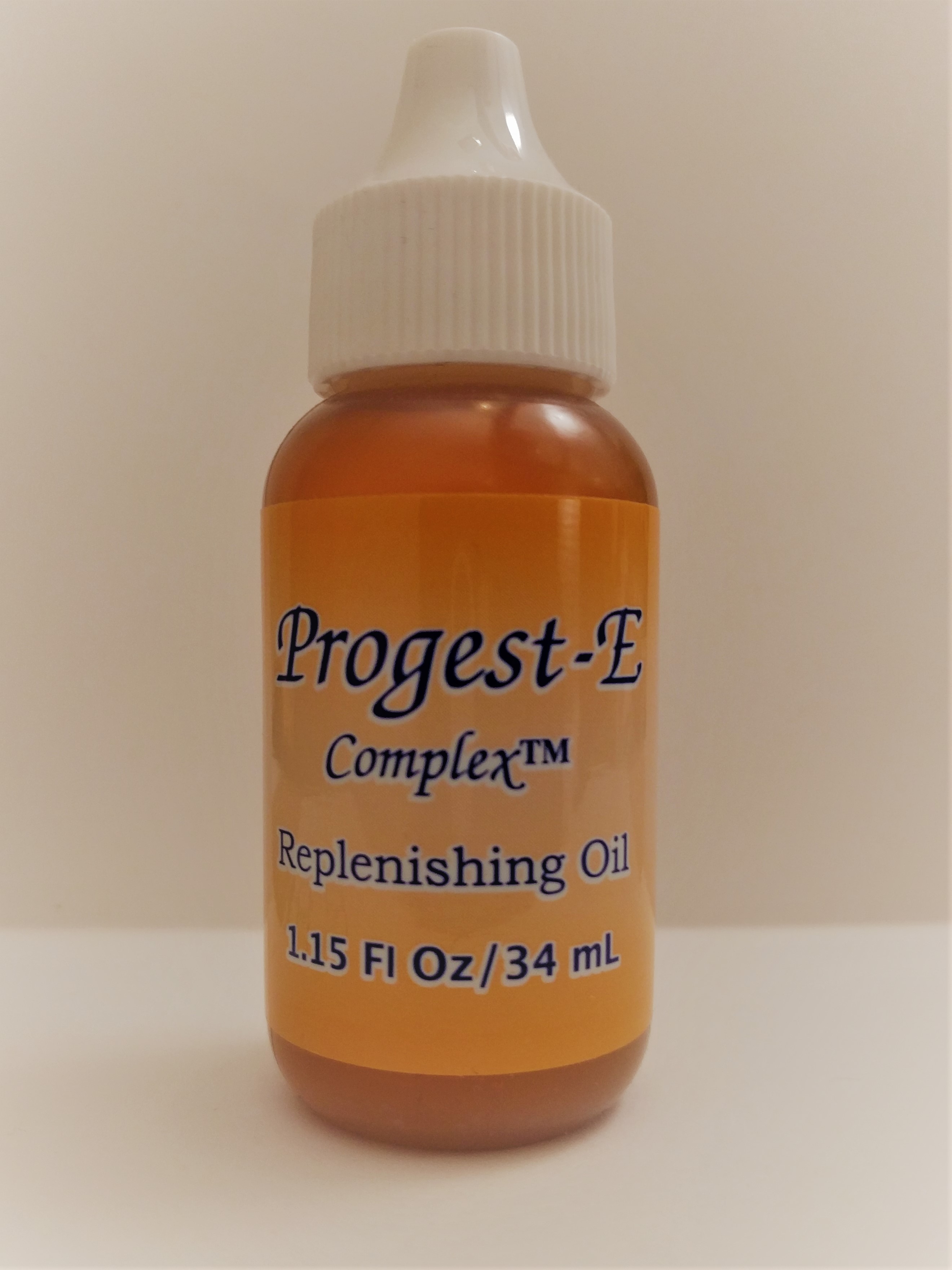
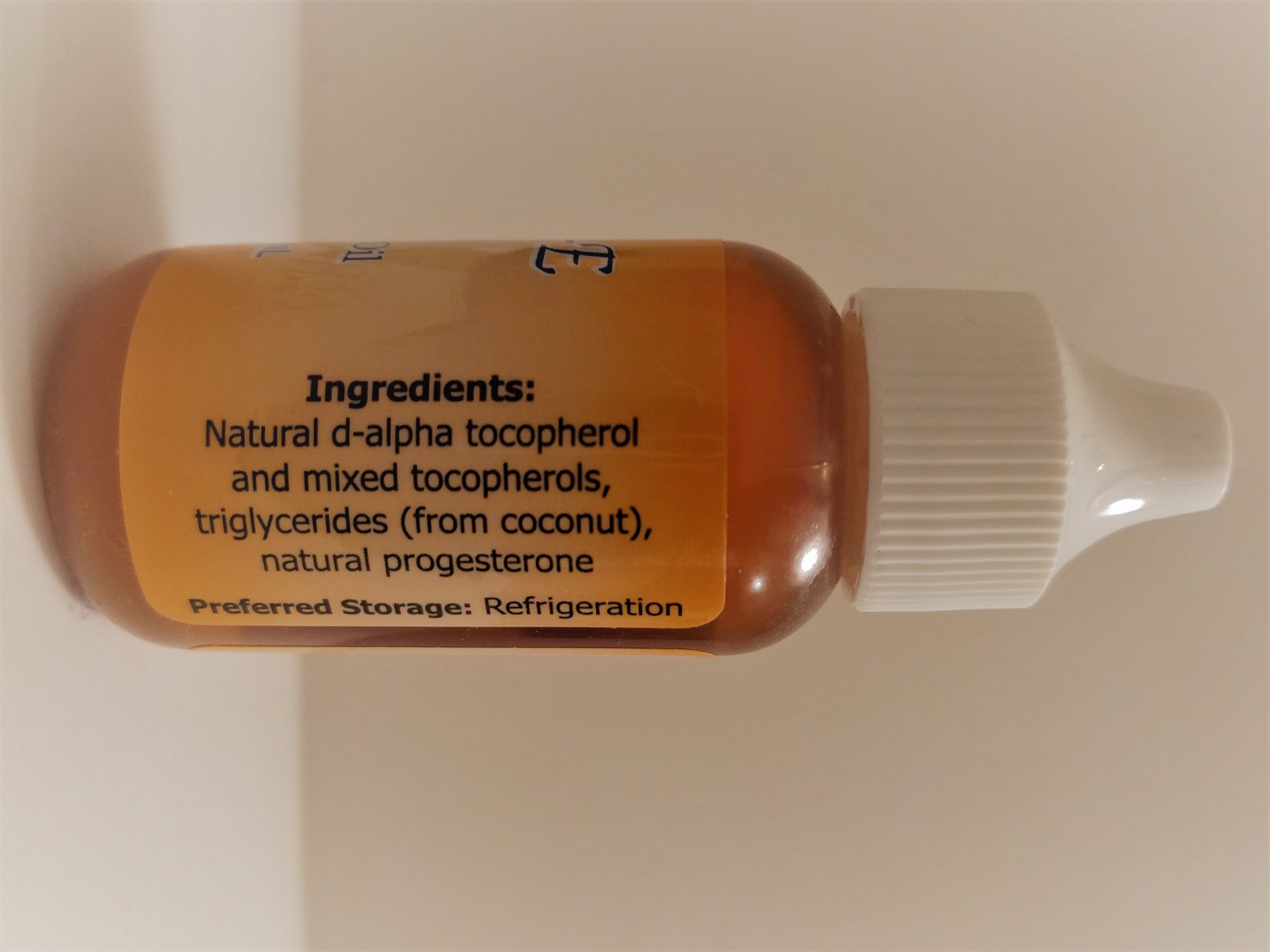
Ingredients: Natural d-alpha tocopherol and/or mixed tocopherols, vegetable triglycerides, natural progesterone. Both the progesterone and the vitamin E are USP.
Progest-E
Complex
Dr. Peat's
patented natural progesterone formula in natural vitamin E comes in a 10%
solution, one drop containing about three milligrams of progesterone.
Normally, the body produces 10 to 20 milligrams per day. A dose of 3 or 4
drops usually brings the blood levels up to the normal range, but this dose can
be repeated several times during the day if needed to control symptoms.
The tocopherols in the product vary but generally a small drop of Progest-E contains between 4 and 22 mg of vitamin E.
NOTE: The natural vitamin E is soy-derived, and
contains no detectable genetically modified DNA or proteins, and has been
independently validated PCR-negative.
The progesterone
source has not changed. Our concern is with the quality and purity of the
materials we use - not the source plant. If progesterone is made properly,
there is nothing left of the original source material. There is quite a bit
of confusion and misinformation surrounding this issue. People ask about the
source for several different reasons. For some people, GMO is the issue and
they can be assured that regardless of the source, Progest-E Complex is free of
GMOs.
Progest-E
Complex, 34 ml, NEW BIGGER SIZE - $35.95 
Dr. Peat's Dosage Recommendations
 For
topical treatment of sun damaged skin, or acne, wrinkles, dark marks, the oil
can be applied directly to the affected areas.
For
topical treatment of sun damaged skin, or acne, wrinkles, dark marks, the oil
can be applied directly to the affected areas.Since progesterone has none of the harmful side effects of other hormones (except the alteration of the menstrual cycle if taken at the wrong time of the month), the basic procedure should be to use it in sufficient quantity to make the symptoms disappear, and to time its use so that menstrual cycles are not disrupted. This normally means using it only between ovulation and menstruation unless symptoms are sufficiently serious that a missed period is not important to you.
If a person has an enlarged thyroid gland, progesterone encourages secretion and unloading of the stored colloid and can bring on a temporary hyperthyroid state which is a corrective process. A thyroid supplement (Electrical Body recommends Detoxadine) may be used to shrink the goiter before progesterone is given.
Normal amounts of progesterone promote thyroid secretion, while a deficiency, especially when too much estrogen is present, causes the thyroid to enlarge. Some mention euphoria as a "side-effect" of progesterone usage, but euphoria is simply an indication of good physiological state. To avoid unexpected anesthesia, the correct dose should be determined by taking about 10 mg (3-4 drops) at a time, allowing it to spread into the membranes of the mouth, and repeating the dose after 10 minutes until the symptoms are controlled.
An excessive estrogen/progesterone ratio (should be 1 part to 10 parts, estrogen to progesterone), is involved in producing aggravating symptoms such thin, bluish skin. Low thyroid is one cause of excess estrogen, and when high estrogen is combined with low thyroid function, the skin can look relatively bloodless.
Symptoms in cycling women are most common around ovulation and in the premenstrual week, when the estrogen/progesterone ratio is normally highest. At puberty, in the early twenties and in the late thirties and menopause are the ages when the ratio is most often disturbed - and these are also the ages when thyroid disorders are most common.
The individual who suffers from one aspect of progesterone (and/or thyroid) deficiency will tend to develop other problems at varying times. With cyclic depression or migraine headaches at 22, there will possibly be breast disease after, and often there will be problems with pregnancy. These people with a history of severe symptoms are the ones most likely to have problems around menopause. Prenatal exposure to poorly balanced hormones seems to predispose children to later hormone imbalances.
Excess stress (which can block progesterone synthesis and elevate estrogen) may being on symptoms in someone who never had them. As well as darker days without sun, toxins and nutritional deficiencies. A very common cause of an estrogen excess is a dietary protein deficiency because the liver cannot detoxify estrogen when it is under nourished.
With a diet high in protein and vitamin A, progesterone can usually be reduced each month. Using thyroid supplementation will also usually reduce the amount of progesterone needed. Occasionally, a women won't feel any effect even from 100 mg of progesterone and this may indicate they need to use thyroid supplementation and diet changes to normalize their estrogen, prolactin and cortisol levels.
Progesterone stimulates the ovaries and adrenals to produce progesterone, and it also activates the thyroid. It shouldn't be necessary to use progesterone indefinitely unless the ovaries have been removed. In slender post-menopausal women, 10 mg per day is usually enough to prevent progesterone deficiency.
Ina 10% solution of progesterone in vitamin E, one drop contains about three milligrams of progesterone. Normally the body produces 10 to 20 milligrams per day. A dose of 3 or 4 drops usually brings the blood levels up to normal range, but this dose can be repeated throughout the day to control symptoms.
For general purposes, it is most economical and effective to take
progesterone dissolved in vitamin E orally, for example taking a few drops on
the lips and tongue, or rubbing it into the gums. (It is good for the
general health of the gums, too.) These membranes are very thin and hence
the progesterone can easily and quickly enter the blood. when swallowed, the
vitamin E allows it to be absorbed through the walls of the stomach and
intestine.
As was mentioned previously, topical application of this oil aids sun damaged
skin. For topical treatment of arthritis, osteoporosis, tendinitis,
bursitis, or varicose veins, to speed absorption it is best to apply a few drops
of olive oil to the area, and then to rub the progesterone -vitamin E solution
into and around the affected area.
Around menopause, a 14 day use pattern, followed by 14 days of no use, seems
reasonable unless symptoms such as hot flashes, recur when the oil is stopped.
In that case, the person could try continuous use for a month or two, then a
return to cycling.
It does not need to be rotated on the skin, although some people prefer to do it
that way.
Progest-E
Complex, 34 ml, NEW BIGGER SIZE - $35.95
Comments or
Suggestions? Contact customer
service.
These statements have not been evaluated by the Food and
Drug Administration. These products are
not intended to
diagnose, treat,
cure or prevent any medical condition. Testimonials
provided here
represent personal experiences and may differ
among individuals.